If you're considering these Dolce & Gabbana black single-band slides, the first thing to resolve isn't the brand or the look, but two specific questions: whether the listed sizes cover your foot length, and whether the snug strap will press on your instep. The available information supports using "runs small, tight strap, better for narrow feet" as sizing clues, but the general D&G slide feedback can't be treated as verified results for this specific item. 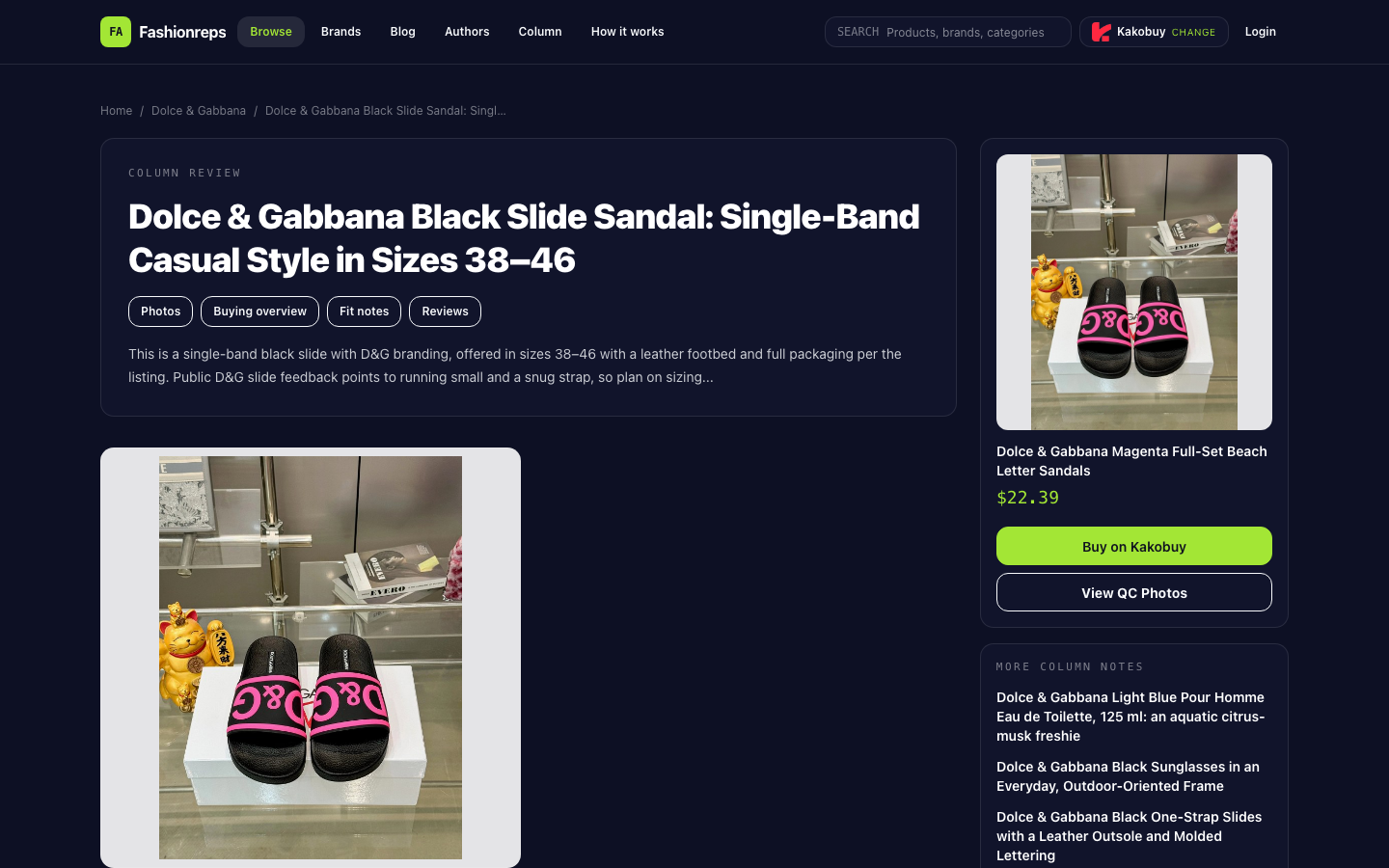
If you're considering these Dolce & Gabbana black single-band slides, the first thing to resolve isn't the brand or the look, but two specific questions: whether the listed sizes cover your foot length, and whether the snug strap will press on your instep. The available information supports using "runs small, tight strap, better for narrow feet" as sizing clues, but the general D&G slide feedback can't be treated as verified results for this specific item.

First Confirm What the Product Page Says
The product page shows black single-band slides with a simple D&G lettering design on the upper. The listed size range is 38–46, with details about a leather footbed, outsole, and full packaging. The page also describes letter placement and the shoe mold.
These are product page specifications, not independent buyer verification for the current batch. There are no independent buyer photos or wear feedback for this specific item in the available information, so we can't make claims about actual softness, strap tightness, or durability.
The reference price on the page also can't be treated as your final payment. Service fees, international shipping, and other costs need to be confirmed on the shopping agent page, and the current information isn't enough to confirm stock status.
Sizing Judgment: Measure Foot Length First, Then Decide on Sizing Up
General D&G slide feedback commonly mentions they run small, with the most common suggestion being to size up by one full size, while some advise at least half a size up. However, this feedback is about the general wearing experience of D&G slides, not independent testing of this specific item.
Follow this order to check:
- Measure your larger foot in the afternoon or evening, wearing thin socks you'd pair with slides or barefoot, and record the distance from heel to longest toe on paper.
- Compare with the actual sizes available on the product page; don't just order based on your usual sneaker size. Different lasts and upper structures can make the same numeric size feel different.
- If your foot length falls right on the boundary of a standard size, prioritize comparing half size up or full size up, especially if you don't like your toes touching the front.
- Before submitting an order, ask the shopping agent to provide photos of the size label, footbed length, and upper details. Without this information, don't treat "suggest sizing up" as a definitive answer.
Is a Tight Strap Suitable for Your Foot Shape?
The key limitation of this type of single-band slide is the upper height and strap circumference. Existing public feedback describes the strap as snug and more suitable for those with narrow feet. "Narrow feet" here includes not just shorter foot length, but also forefoot width, instep height, and lateral space when toes are spread.
You can make a preliminary judgment using these criteria:
- Lower instep, narrower forefoot, and typically no issues with single-band or strap sandals pressing red marks on the upper, the compatibility chance is relatively higher.
- Higher instep, wider forefoot, or frequent need to loosen straps due to upper pressure, treat the tight strap as a major risk.
- If your toes need to push noticeably forward to prevent heel slip, simply increasing the size may add length but not necessarily solve the strap height issue.
- If you prefer loose, soft, and quickly adaptable slides, there isn't enough evidence from public feedback to buy these with confidence.
Sizing up mainly improves length allowance, but it doesn't guarantee the strap will loosen accordingly. Therefore, buyers with wide feet or high insteps cannot rely solely on "sizing up" to solve all fit issues.
Evidence Check Order Before Ordering
It's recommended to judge the product page information, sizing information, and QC photos separately:
- Verify that the actual color, single-band structure, and D&G lettering position match the product page.
- Request photos of the upper front, footbed, outsole, inner size label, and packaging.
- Pay attention to whether the strap connection to the footbed is obviously deformed, and whether the footbed length matches the chosen size.
- If the QC photos can't clearly show the size label, upper pressure marks, or footbed details, pause shipping or ask for additional photos.
- Treat QC photos as a check of the current item before shipping, not as proof of wearing comfort or long-term durability.
Should You Buy or Skip?
If you want a black, single-band, simple look for home or poolside use, have narrow feet, and are willing to first verify foot length and consider half or full size up, you can proceed to check QC photos before deciding.
If you prefer to buy directly in your usual size, or have a high instep, wide forefoot, or can't tolerate strap pressure, it's recommended to skip cautiously. Especially when you can't get clear size label and upper detail photos, you shouldn't rely solely on the product page description to confirm fit.
Finally, keep a limitation: current evidence supports a cautious judgment between "the page specifications" and "general D&G slide feedback about running small," but it cannot prove that this specific item definitely runs small, definitely suits narrow feet, or that the leather footbed is definitely soft or durable.
Editor score 4.2 / 5