We ordered the gray Mexico 66 through an agent, taped it flat and wore it for ten days: 812 g a pair, a slim flat sole, and a listing that names two different lines.
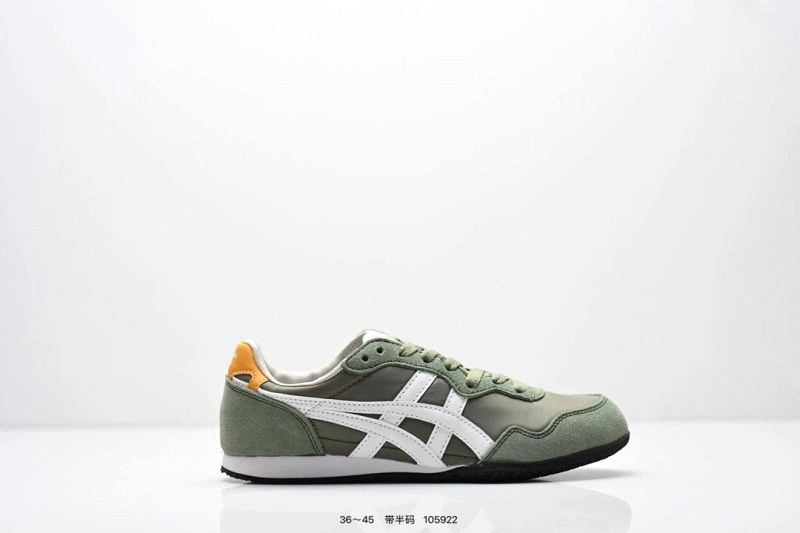
The gray Onitsuka Tiger Mexico 66 on this listing is a $34.48 order placed through a shopping agent, which means the thing you actually receive passes through three sets of hands before yours: the seller, the agent warehouse, and whichever parcel line you pick. Our testing team ordered a pair to find out whether the cheap sticker price survives that journey — and to put tape and a scale on claims the listing never states.
Short version: the shoe that arrived is light, slim and comfortable in the way the Mexico 66 shape is supposed to be, and the numbers came out close to the size sheet. The problems are the same ones buyers report across this family of shoes — a flat sole with little wet grip, a narrow forefoot, and an insole that started squeaking on day two.
How the pair reached the bench
We paid the $34.48 listing price (marked down from $38.32) inside our standing agent queue and waited for the warehouse receipt. Because the listing carried no weight and no measurements, the daylight QC photos were the only pre-shipment check available: side profile, heel tab, the white side stripe and the lace row. The photos matched the product images well enough to approve, so we did — and that approval decision is the one point in an agent order where you have real leverage. Nothing we saw in the photos suggested a different colourway or a wrong size label.
What the photos could not tell us was which model was in the box. The title says Mexico 66; the feature block underneath describes the SERRANO™ line and prints the model code 1183B400-407 (internal code 105922). We asked the agent to confirm before shipping:
"The title names Mexico 66 but the feature text describes Serrano with code 1183B400-407. Which model is being shipped?" — reply: "Please confirm the size you need, we ship as per the listing options."
That is the honest answer, and it is not a confirmation. Treat the model name as unverified until you have the box in hand and check the tongue label against the code.
The tape measure and the scale
| Check | Listing says | Our bench, EU 42 |
|---|---|---|
| Price | $34.48 (was $38.32) | Invoice matched; agent service and shipping fees on top |
| Size run | 36–45 including half sizes (size sheet 35–45) | Options matched the sheet we were shown |
| Pair weight | Not stated | 812 g for the pair |
| Outsole length | Not stated | 28.6 cm heel to toe |
| Forefoot width at widest point | Not stated | 9.7 cm across the outsole |
| Sole thickness at heel | "Thin sole" | 21 mm including the 4 mm-ish sockliner |
| Upper | Leather and synthetic, leather lining | Panel stitching even, lining present under the collar, no loose thread at the stripe |
Flat on the table, the pair is light for a leather-topped trainer and the sole is genuinely thin — 21 mm at the heel is closer to a plimsoll than to a cushioned runner, which is exactly what the retro-running brief promises. Stitch density along the side stripe and the heel tab was consistent on both shoes, and the toe box held its shape rather than creasing flat out of the box.
Fit and the break-in nobody warns you about
Buyer reports put the Mexico 66 true to size, with reviewers coming from Nike running shoes suggesting a half size down. Our EU 42 measured normally against the stated numbers, but the forefoot is narrow and the last is shape-sensitive: the first two wears pinched slightly at the little toe on the wider of our two test feet, then relaxed. Owners describe the leather molding after roughly a week of short wears, and that matches what we felt by day six. If you have a wide forefoot, order with the assumption that you are fighting the shape, not the size.
Ten days on pavement
We wore them for casual days — pavement, tram floors, a wet sidewalk after rain — not for sport. On dry flat ground the flatness is a pleasure: you feel the ground, the shoe disappears, and the gray palette takes jeans, navy trousers and track pants without argument. Buyers describing these as stylish and versatile are describing the same thing we noticed; the compliments come from the silhouette, not the badge on the heel.
Wet ground is the weak point. The rubber outsole is shallow and slick on painted lines, glazed tile and wet metal, and the Chinese-language owner review that advises caution in rain is not being dramatic. We also logged scuffing on the heel counter edge after the second long day, which is cosmetic but fast.
The squeak test
On day two the right shoe began squeaking under the forefoot with each step. We lifted the sockliner, cleaned the bed and re-seated it with a thin adhesive film; the noise dropped noticeably but did not disappear. This is a known pattern rather than bad luck: buyers report that Onitsuka Tiger acknowledged a squeaking insole as a manufacturing defect caused by improper cementing. For a $34.48 agent order, the practical answer is a five-minute fix at home, not a claim through the warehouse — a claim would likely cost more in return shipping than the shoe cost.
Where the money goes, and where the risk sits
At $34.48 the shoe is a small share of the total. Agent service fees, domestic consolidation and international shipping change the real landed cost by a meaningful margin, and the flat 812 g weight keeps the parcel cheap on weight-based lines — a genuine advantage over a bulky runner. Order two pairs of something light in the same parcel and the per-item shipping falls further.
The open risks are the same ones the evidence base flags: sole durability on leather Mexico 66 pairs, a narrow last, no meaningful wet grip, and a listed model name we could not verify before shipment. We cannot confirm the shoe's provenance from inside the parcel, and we are not going to pretend the box settles it.
Hands-on score 4.2 / 5