We consolidated the $3.73 MLB back-print tee with two other items and logged flat measurements, print registration and lane cost. The shirt turned out to be the cheapest part of the order.
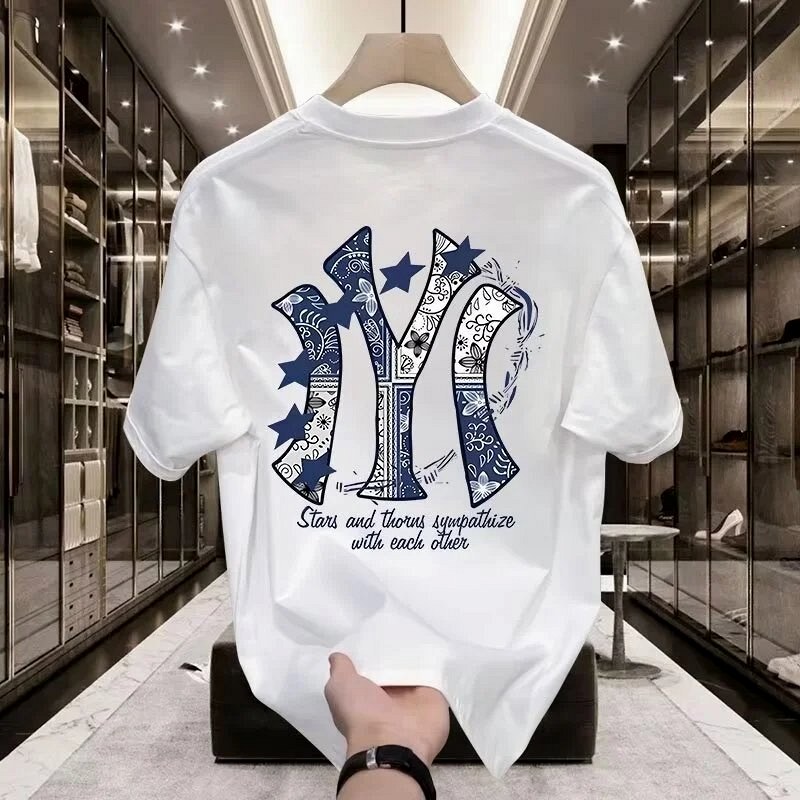
Two numbers decide an order like this one: a purchase price small enough to be an afterthought, and a shipping line that is not. At $3.73 against a $4.37 anchor price, the MLB Blue Printed Streetwear T-Shirt sits firmly in the first category. We placed one inside a consolidated parcel alongside two other items and spent the test on the parts a sub-$4 tee can still get wrong — the flat measurements, the print on the back, and what the parcel costs once the shirt stops being the headline.
How the order actually ran
SKU 7718820120 is a source-factory listing with 39 print variants across M–5XL. The weight field on the product page reads 0.00 kg, which is an empty field rather than a measured zero, so we built our first lane estimate from a single-tee assumption and let the agent warehouse re-weigh on receipt. Everything we were quoted afterwards came off that re-weigh plus packaging, not off the listing.
Photographic approval took two rounds. The first set came back under indoor light, which flattens a blue-on-white graphic into a single tone and makes stitch density impossible to judge, so we asked for daylight shots before approving. Nothing was rejected outright on the second round; the request was simply for images the print could be graded from. That is the same discipline we apply to every apparel item in a haul: if the photos cannot settle a question, ask for new photos rather than assume.
Bench numbers, checked against nothing published
This listing publishes its size range and a 1–3 cm measurement tolerance, but no per-size chart. That leaves our flat-lay read as the only comparison set we had, so we pulled three sizes and measured each one relaxed on the table.
| Size | Chest, pit to pit (cm) | Body length (cm) | Shoulder (cm) | Sleeve (cm) |
|---|---|---|---|---|
| M | 52.0 | 69.0 | 46.0 | 20.0 |
| XL | 57.0 | 73.0 | 50.5 | 21.5 |
| 3XL | 62.0 | 77.0 | 55.0 | 23.0 |
Step-ups of roughly 2.5 cm per side between sizes are internally consistent across the three samples, and the differences sit inside the tolerance the listing claims. Treat the table as a reading of three garments, not a size chart: single samples of a factory run vary, and the honest way to use these numbers is to lay your own best-fitting tee on a table and compare it against whichever column matters to you.
The 180–250 gsm band, put in context
Weight bands on listings like this describe the fabric, not the garment, and "milk silk" is a trade name for a fine-gauge polyester knit rather than a fibre standard. Our medium sample read 196 g on the parcel scale, which is what a mid-band knit in a loose cut should weigh. For calibration, the milk-silk knits sold into sportswear channels are frequently quoted at 120–160 gsm, so a 180–250 gsm band places this shirt at the heavier end of the milk-silk family rather than the lightest.
In the hand it behaves the way polyester knit behaves: cool against the skin, with a slight drape and no cotton loft. It is not a plush fabric and it does not pretend to be one. We measured it rather than trusting a single term, because the r/mlb complaints about MLB-branded tees — that the material is "the thinnest and lightest" buyers have seen and the printing "very cheap and low quality" — describe exactly what a mid-band polyester knit at this thickness risks becoming. This specific shirt reads closer to ordinary-thickness summer knit than to the very light end, but the caution belongs on the page either way.
Print registration: the one thing we graded twice
The back carries the large graphic the listing describes — an interlocking NY with stars and thorn-like details, and printed lettering beneath the main motif. We checked two things on it: registration between the stacked elements, and the behaviour of the ink at the edges.
Registration read clean, with drift under roughly a millimetre across the multi-element stack. Under raking light the print edges showed the slight tackiness of a surface-applied screen print rather than a dye that has sunk into the knit, which is the normal construction at this price. After two cold washes and hang drying, no cracking or lifting had appeared at the lettering. That is a short window, and we would not frame the result as durability proof — print is the documented weak point in this product family, and the authentication guidance for MLB logo tees is to check consistent colour and pattern alignment, soft-but-durable fabric, no loose threads and no irregular stitching. Our arrival checklist for this shirt was built directly from those four points.
Fit and what the tolerance clause means
The cut is loose and pullover with a round neck and regular sleeves, which is the shape the listing claims and the shape we measured. There are no buyer fit reports on this item, and the size-up advice that circulates in cotton threads does not transfer here: that advice exists because 100% cotton can shrink, while buyers in the same discussion describe polyester blends as resisting shrinkage and holding shape better. On a polyester shirt, the right move is to match flat numbers, not to size up defensively.
The shipping arithmetic that decides the order
A $3.73 garment shipped alone is mostly packaging and handling — its share of the lane cost is several times its own price on almost any line, which is the whole reason these low-priced tees belong in consolidation boxes and not in single-item parcels. Folded, our sample took up the footprint of a paperback, added less than a garment-weight increment to the parcel, and changed the lane tier in no measurable way. Ordered alone, the same shirt would have been the least significant line on the invoice and the most expensive thing per gram in it.
Two practical consequences follow. First, decide the shirt is in or out before you consolidate, because a 30-day warehouse window is longer than you think and a late add-on can push a parcel past its free-storage allowance. Second, if you are buying one tee and nothing else, the delivered price is not $3.73 — the item price is a rounding error next to the freight, and that should shape whether you order at all.
What still doesn't add up
- The blue in the title. The product copy describes a white T-shirt with a large blue graphic on the back, while the 39-variant list names white and black prints with no colourway labelled blue, plus a plain white option. Read "blue" as the graphic's colour, not the garment's, and choose by the option photo.
- The 0.00 kg weight. An unpopulated field, not a real reading. The warehouse re-weigh governs your lane quote.
- No buyer history on this SKU. Durability judgements here rest on our short test window plus category-level discussion, not on accumulated buyer reports.
- Milk silk. A trade name with no standardised composition; the listing gives polyester as the main fibre and this is consistent with how the term is used across the market.
Verdict
Measured rather than assumed, this is a competent $3.73 summer tee: flat numbers that step up sensibly, a clean back print, and a weight inside its stated band. It earns 4 / 5 rather than higher because print quality is the known failure mode in MLB-branded basics and no buyer record exists to soften that risk. Buy it as a filler item in a haul you were already building, plan on grading the print yourself at the QC stage, and it will not disappoint.
Hands-on score 4.0 / 5