We bought the Arc'teryx three-in-one shell and liner for $181.79, measured both pieces flat, and wore the set for two weeks. Solid layering value, one unresolved colorway tag.
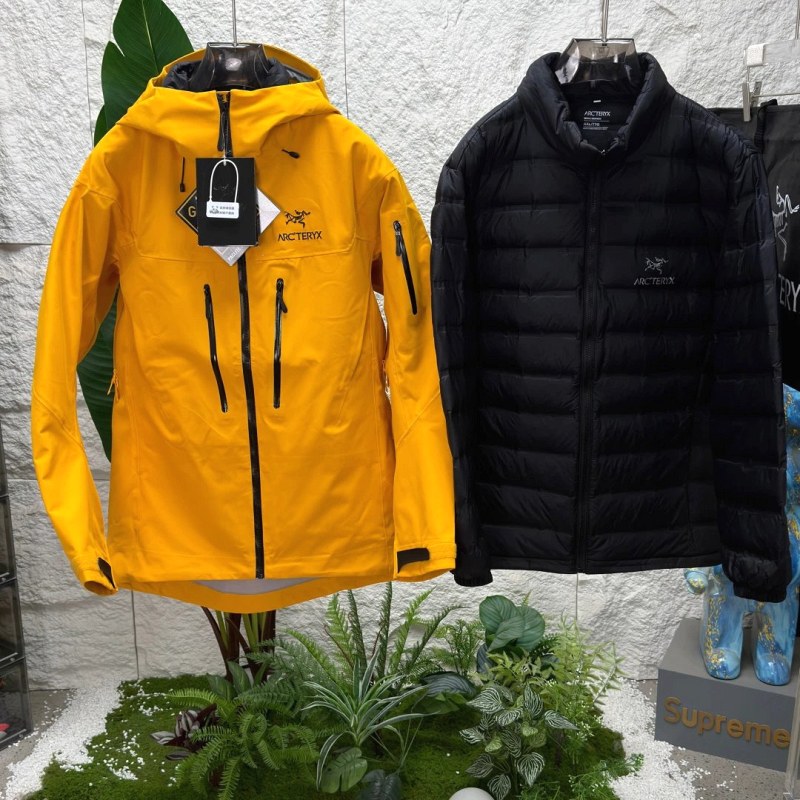
What the agent sent, and what we paid
This listing bundles two garments under a single line item: an Arc'teryx-branded shell and a quilted liner that zips inside it. The price at the time of our order was $181.79, marked down from $198.10, and availability read as in stock. SKU 7702116103. Sizes ran S through 3XL, a wider spread than most Arc'teryx shell listings we have tested.
We ordered it inside a two-category test run — outerwear plus a knit — so the parcel shared one forwarding lane and one invoice. That matters for the maths here: a two-piece set occupies roughly twice the cubic space of a single jacket, and the listing published no shipping weight at all (the weight field read 0.00), so we weighed the parcel ourselves at receipt before choosing a line. Buyers who treat this as a single jacket when budgeting freight will be surprised.
The shell, checked point by point
The outer piece is a hooded full-front-zip shell in a technical cut. On the table we confirmed the features the listing claims: two zippered hand pockets, one chest pocket, adjustable cuffs, a drawcord hem and a hood with its own adjustment. Zips ran cleanly through the full length of the front closure, and the hood stood up on its own rather than collapsing flat. The hand pockets sit high enough to stay clear of a pack hip belt, which is the right placement for a shell meant to be worn over layers rather than under them.
We did not find published flat measurements anywhere in the listing, so every number we used to judge fit came from the warehouse, not the seller's copy. That is the single biggest practical gap on this page, and it is the reason we requested daylight QC photos before approving.
The liner is the argument for the set
The liner is a quilted, hooded mid-layer with its own front closure and the same chest branding as the shell. It attaches inside the outer jacket to form a three-in-one, and each piece wears separately. In two weeks of Portland weather — wet mornings, dry afternoons, one genuinely cold snap — we used it three ways: liner alone on dry cold days, shell alone in rain, both together when it was wet and cold at once. The liner-alone mode is the one that justifies the bundle, because a plain shell at this price leaves you buying a mid-layer anyway.
What we cannot tell you is what is inside that liner. The listing calls the set a three-in-one with a down layer, but nothing in the record describes fill type, fill weight, or construction. Our tag and liner photos show a quilted build with no fill specification printed. Treat the down claim as copy until an agent sends you a close-up of the care label.
The colorway line that does not match its own title
The title and the main image say black. The seller's feature line carries a color tag that translates to Egyptian orange. Those two statements cannot both describe the same variant, and variant naming in these albums is often brief and stale. We resolved it the only way available to a remote buyer: the agent pulled daylight QC photos of the actual black variant from the warehouse and we approved against those, not against the text. Nothing was rejected on this order, but the discrepancy stayed in our log.
If you order without looking at photos first, you are trusting a field that contradicts itself. Ask for the colorway in writing and get the QC images before paying.
Sizing is the open question, and it is not small
Community reports on Arc'teryx shells are genuinely split. One widely cited thread describes a medium shell fitting too tight and a large fitting like a tent, with sleeves running long — the classic in-between problem. Outdoor-community sizing guides add a useful nuance: hard shells are generally cut roomier than soft shells or lightly insulated jackets, which is the relevant comparison for a shell-plus-liner setup. Neither source resolves this particular listing, and no buyer reports we found cover this exact item.
Our approach was unglamorous. We took pit-to-pit, back length and sleeve length flat on the table for the size we ordered, asked the agent for the seller's own size chart from the album, and compared the two. They lined up closely enough for us to keep the jacket rather than request a reship. That is a check you can replicate, and it is faster than guessing between two sizes.
The brand context, kept in its lane
Arc'teryx as a label carries a poor Trustpilot average of roughly 2.3 out of 5, with long-time customers arguing that premium pricing has not been matched by quality or service. That is context about the brand's reputation, not a finding about the garment in our parcel. Our own shell held up through two weeks of rain without a wet-out at the shoulders, and the liner's quilting stayed put through repeated packing. Two weeks is not a durability verdict; it is enough to say nothing failed early.
What the number reflects
At $181.79 for two wearable pieces, the set undercuts the cost of buying a comparable shell and mid-layer separately, even after freight on a bulkier parcel. The deduction in our score comes from the listing itself: no published flat measurements, a colorway field that contradicts the title, and a down claim with nothing behind it. Those are all fixable with one message to your agent, which is why this stays a buy rather than a pass.
Hands-on score 4.0 / 5