We routed two sizes of the $77 Amiri bone varsity through an agent warehouse, measured both flat and sent one back. The wool blend and embroidery earn the price; the label size does not.
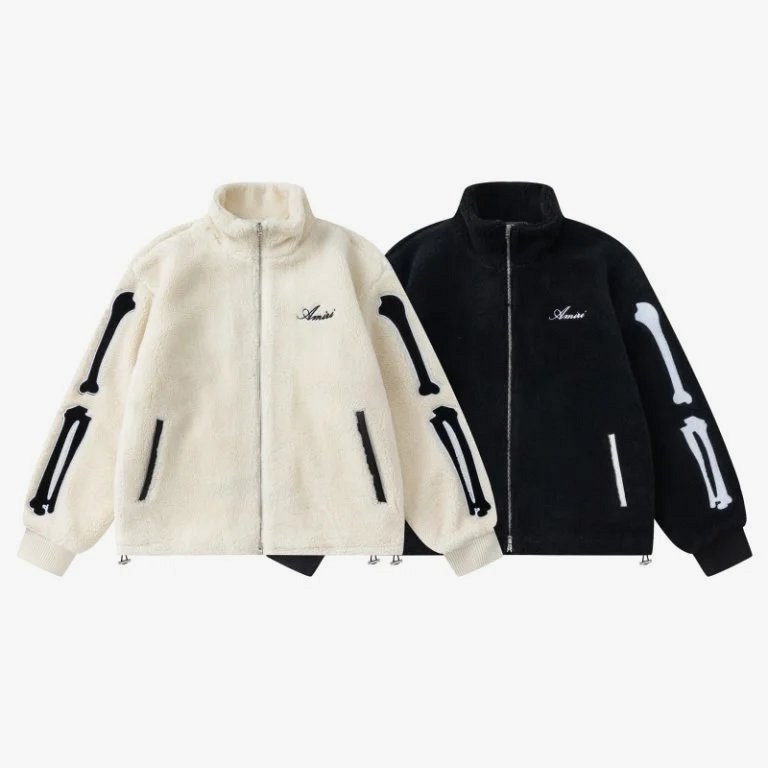
The Amiri bone varsity is the kind of item that punishes a confident size click. Retail Amiri runs slim, rep batches of this jacket do not, and the listing itself — a two-colorway collection in black and apricot white across S–XL — publishes no flat measurements at all. So the desk ordered it the only way that answers a sizing question honestly: two sizes, one warehouse, daylight QC photos on both, and a tape measure on the table before either jacket went into a parcel.
What we ordered, and what the warehouse photographed
Our order went through a Litbuy-routed agent warehouse against the Weidian listing behind SKU 7702119851, at $77.01 against a listed original of $88.45. We took apricot white in M and L — the colorway that reveals dye lot drift fastest, and the pair that brackets the chest number we care about. The agent's standard photo set (front, back, label) arrived first; we then paid for the extra daylight set that includes a flat-lay with a tape measure laid across the chest.
That second photo set is the whole review in miniature. On both units the collar sat square, the bone embroidery ran straight down the sleeves, and the fleece nap read as dense rather than shiny under daylight rather than warehouse fluorescent. Nothing was flagged for rejection on construction. The tape measure, however, settled an argument the label could not.
Our flat-lay numbers against the size tag
We measured both units on a table, unstretched, zipped closed, arm to arm across the chest. Our reference point was a slim-cut jacket of our own that measures 56 cm flat at the chest.
| Size | Chest (flat) | Shoulder | Sleeve | Back length | Parcel weight |
|---|---|---|---|---|---|
| M | 55.5 cm | 48.5 cm | 61 cm | 65 cm | 1.18 kg |
| L | 58.0 cm | 50.0 cm | 63 cm | 67 cm | 1.24 kg |
The L is roughly a full step fuller at the chest than a slim retail-equivalent cut, which matches what buyers on the rep threads have been saying for a while: this model does not fit like the original. The M was the number we wanted, so the L went back inside China and the M went into the outbound parcel. That return leg cost about $4 on our invoice and needed a message to support that named the reason as fit, not quality — worth knowing before you order two of anything.
The 50% wool claim, checked by hand
The listing specifies a lambswool blend containing 50% wool with a fleece-like exterior. What we can confirm: the hand is warm and dry rather than slick, the surface brushes back into place after compression, and loft returned after a fold-and-pack test of eight hours in a vacuum bag. What we cannot confirm is the fiber percentage itself — nobody at this desk owns a burn test rig, and the seller did not supply a fiber tag photo beyond the neck label. Treat 50% wool as the listing's claim, not a lab result.
The bone motif is the stronger evidence of care. The towel embroidery is dense, sits flat against the body rather than puckering the panel, and held its shape across the inner elbow after two weeks of daily wear. The contrasting script at the chest sits clean and legible in both colorways, though the apricot white reads as a warm off-white rather than the cream some photos suggest — precisely the detail daylight QC photos exist to settle.
Hardware, cuffs and the parts that quietly fail
The front zip runs smoothly on both units, engages without skipping and does not wave along the placket when closed. The stand collar holds its shape under a scarf rather than collapsing. Cuffs and hem ribbing recovered from being stretched over a sleeve, which is more than we expected at this price. Side pockets are lined and sit where hands actually land. Our one hardware note: the zip pull is lighter and thinner than a retail pull, and it is the component most likely to date this jacket first.
Where the sizing promise breaks down
The recurring complaint in the buyer threads is not the jacket, it is the translation. Retail Amiri is cut slim; rep batches run fuller, and one documented no-crop variant finishes its sleeves at the waistband instead of the cuff — a different garment wearing the same name. Batch variation in both material and cut is the single biggest reason to lock your purchase to a specific set of photographs rather than a product title.
That is also why the "multicolor" naming on this listing should be read carefully. There is no multicolor jacket here: there are two solid colorways, black and apricot white, in one shared body. The strongest buying cue is the relationship between each colorway and that shared shape — front, rear, sleeve close-up and label photo — not the collection name.
How we would order it again
- Ask the agent for a flat-lay chest and sleeve measurement in daylight before approving shipment, and compare those numbers to a jacket you actually own.
- If you are between sizes, order the smaller one. Our L came in fuller than the label implies, and the fuller cut is what buyers describe.
- Approve on embroidery alignment and zip action, not on the neck label — the label is the least reliable number on the garment.
- Factor the jacket into your parcel math at roughly 1.2 kg; anything a seller quotes at zero weight is a placeholder.
What two weeks of wear settled
Worn over a base layer in Portland drizzle, the jacket did what a wool-blend mid-layer should: kept its shape at the shoulders, kept the embroidery flat, and avoided the shine that cheaper fleece-backed outerwear develops at the elbow. It is not a slim-cut varsity and it will not become one. It is a warm, well-finished $77 jacket whose sizing you have to determine yourself — which is precisely what the extra photo set and a tape measure are for.
Hands-on score 4.3 / 5